IURC Issues Final Order in AES Indiana Rate Case
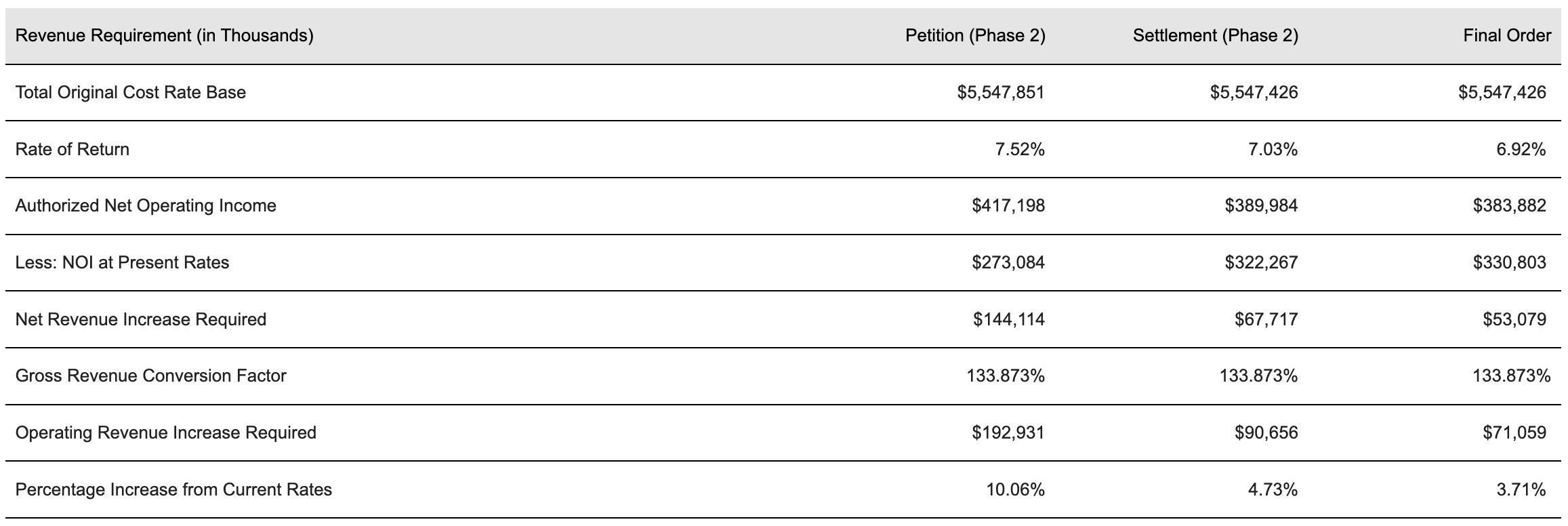
The Commission issued its Final Order today in AES Indiana's electric base rate case, Cause No. 46258, approving the October 2025 settlement agreement with two modifications that further reduced the authorized revenue increase. The Commission authorized a total revenue increase of $71,059,000, producing total annual operating revenues of $1,979,693,000 and a net operating income of $383,882,000. The Order was approved 3-1, with Commissioners Zay, Veleta, and Ziegner concurring, Commissioner Deig dissenting, and Commissioner Swinger not participating.
The proceeding is the first major rate case decided by three Commissioners who joined the agency in January, and it arrived with unusual complexity. AES Indiana initiated the case in June 2025 and since that time there is a pending acquisition of its parent company, a billing system controversy, and a partial settlement that left the OUCC and Citizens Action Coalition in opposition.
In its petition, AES Indiana sought a fully implemented revenue increase of $192.9 million, or approximately 10.06% above current rates. The company proposed an authorized return on equity of 10.7% and proposed to recover depreciation using the Equal Life Group methodology, which front-loads cost recovery relative to the Average Life Group approach the Commission has historically favored. The OUCC opposed the request on multiple fronts, though the company identified a calculation error in the OUCC's filed testimony that, when corrected, would have produced a recommended increase of approximately $14.7 million rather than the decrease the OUCC had reflected. The Citizens Action Coalition argued that the company's billing system failures warranted more significant ratemaking penalties than even the OUCC recommended.
AES Indiana's transition to a new customer information system produced widespread billing errors, extended customer service disruptions, and generated more consumer comments to the Commission than any recent Indiana IOU rate case. The company acknowledged approximately $47 million in combined uncollectible accounts losses and forgone late fees attributable to the transition. Consumer parties argued those losses should inform the Commission's treatment of the overall revenue request and that the Commission should open a separate investigation into the company's conduct.
Settlement negotiations produced an agreement in October 2025 among AES Indiana and a coalition of its largest industrial and commercial customers, including Eli Lilly, Allison Transmission, Indiana University, Walmart, Rolls-Royce, and the City of Indianapolis. The OUCC and Citizens Action Coalition declined to participate, leaving the settlement to reach the Commission over their continued opposition.
The settlement reduced the fully implemented revenue increase to $90.7 million, or 4.73% above current rates, a reduction of approximately 53% from the company's original filing. The authorized return on equity was set at 9.75%, producing a weighted average cost of capital of 7.03%. The parties agreed to use the Average Life Group depreciation methodology, reducing the revenue requirement by approximately $40 million relative to the company's proposal. Additional reductions came through a $15 million cut to the base cost of fuel, a $6 million reduction in vegetation management expense with the trim cycle extended to six years, a $4 million payroll reduction, and the extension of various amortization periods from three to four years. On the billing system, the equity return on the $40.7 million rate base value of the billing system was removed from the revenue requirement, recovery of the approximately $47 million in billing-related losses was permanently barred in this and any future proceeding, and the company withdrew its proposed property tax tracker rider.
The settlement also included forward-looking commitments with significant policy implications. AES Indiana agreed not to seek a new base rate increase effective before January 1, 2030, and agreed to delay its next TDSIC infrastructure plan until no earlier than January 2028, with a stakeholder process required at least six months in advance of any such filing. A stakeholder process to develop a public-facing electric vehicle rate must begin within six months of today's order. Under HEA 1002 (2026), AES Indiana will also be required to file a multi-year rate plan in January 2029, though rates from that case are not expected to take effect before 2030.
The Commission approved the settlement as modified on two issues. It reduced the authorized return on equity from 9.75% to 9.50%, producing a WACC of 6.92%. The Commission acknowledged the settled ROE was within the range it found reasonable but concluded that range alone did not compel acceptance of 9.75%. Citing the “Five Pillars” framework and the need to balance investment support against customer affordability, the Commission found the lower figure warranted. It also rejected the settlement's vegetation management expense of $36.6 million in favor of the OUCC's recommended level of $25.247 million, the amount authorized in AES Indiana's prior rate case. The Commission found that holding expense at that level, which effectively extends the trim cycle to approximately eight years, was an acceptable affordability tradeoff given the utility's shift to an extended trimming specification that it found presented lower reliability risk than the prior methodology.
The Commission declined to adopt the Citizens Action Coalition's proposed Affordable Power Rider but encouraged AES Indiana to work with the OUCC and other interested parties to explore low-income affordability options in a future rate case, as contemplated under HEA 1002 (2026).
The settlement contained a withdrawal provision allowing any settling party to void the agreement if the Commission's modifications are deemed unacceptable. The settling parties have fifteen business days from today to make that determination. A 63% reduction from the original petition, a Commission-imposed ROE cut below the settled figure, and a vegetation management rollback to prior authorized levels make this order one of the more consequential rate decisions the Commission has issued in recent years. How the settling parties respond to the modifications will determine whether those terms hold or whether the proceeding returns to litigation.